Thursday, November 10, 2011

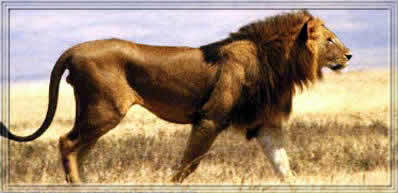
what is lion tatoo

What is the meaning of a lion tattoo?


in the christian world a lion represents courage. but it also represents strength, passion, love, and so much more. its the king of the jungle, and can take anything life throws at it. its truly a strong animal if not the strongest.


What does a lion tattoo symbolize?

now i dont know about the rest of the world but for punjabis, it represents the community as a whole. It is used to symbolize the heroic and couragous acts of their ancestors

What is the meaning of a Lion of Judah tattoo?

The Lion of Judah refers to Jesus Christ as the triumphant King of all creation. See Revelation 5:1-5 and Matthew 28:18. Jesus is known for his dual role as the humble Lamb of God (God's sacrifice for our salvation from sin) and the sovereign Lion of Judah (the King of kings). "Judah" refers to the son of Jacob from whom Jesus' parents were descended from. See Matthew 1 and Luke 3. Jesus Christ's first coming to Earth was for fulfilling His role as the Lamb; in His second coming He will be seen in all His deserved glory as the Lion of Judah! Most importantly: IF YOU ACCEPT THE SACRIFICE OF THE LAMB OF GOD, YOU WILL ESCAPE THE JUDGEMENT DESERVED BY ALL SINNERS. See Revelation 21:6-8.

Wednesday, November 9, 2011

The cat's whiskers: Wild about white lions and charmed by cheeky cheetahs at South Africa's feline-friendly conservation reserve

Mother Nature has made some gorgeous animals, hasn't she? Massive elephants and titchy shrews, fragile butterflies and big black-and-white whales, cute red pandas and awesome eagles.
But surely the most beautiful creatures on Earth were crashed out a few hundred feet from our safari vehicle, with not a care in the world and wondering what all the fuss was about. Panthera leo, the African lion, is one spectacular animal anyway, but imagine him with white fur and pale blue-green eyes highlighted in black, as if someone had taken a giant eyeliner to them and to his nose and mouth, too.
White lion
Man of the house: White lions are endangered - making spotting them in the wild a true privilege
And we'd found two of them, both young males, handsome faces framed with great manes of white fluff, stretched out companionably under the sun.
These white lions live at Sanbona, three hours' drive from Cape Town. The privately owned, 130,000-acre wildlife reserve, one of South Africa's largest, is at the centre of an extraordinary conservation project which, for once, shows a positive outcome to mankind's interference with the natural world, and not just for these lions.

Sanbona's land used to be 19 farms. Limited records prove the area had plenty of wildlife 250 years ago, but it was largely killed or, like the resident San people, driven away when Europeans moved in their sheep and cattle. Following 150 years of over-grazing, the environment was spoiled.
Then, in 1998, Adrian Gardiner and the Mantis Collection of luxury camps and lodges stepped in. The plan was to undo the damage, to reintroduce the wildlife and effectively turn back the ecological clock; an exciting if somewhat daunting ambition. Sanbona was born - San means bushman, bona means vision - and a £2.25 million project was launched.
Twelve years on, the conservation team's hard work is paying off, the land is in recovery and the reserve is full of animals. 'It's been a slow process but the rewards have been worth waiting for,' wildlife manager Paul Vorster told me during my visit.
There have been a few surprises, too, notably the unexpected presence of rare riverine rabbits. The team knew they were there only after one came off worse in a fight with a vehicle. But where there's one, there are many, and ecologists are very excited. Sanbona supports a lot of research projects, including one into the critically endangered mammal.
Fascinating as a little bunny might be, the truth is he isn't likely to attract hordes of visitors. Tourists and the money they bring in are essential - after all, Sanbona is a business and receives no grants.
Luckily, it has many other fabulous, less elusive animals. If you love African safaris, you'll adore the place. For a start, it has to be one of the most beautiful reserves in the world. Sanbona sits at the foot of the Warmwaterberg Mountains in the heart of the little, or Klein, Karoo region.
Within its boundaries are a kaleidoscope of habitats, created millions of years ago from awesome geological processes. Sea beds shunted up and folded into mountains still carry the fossilised evidence of marine creatures, for example.
I was enchanted by the biodiversity hotspot Succulent Karoo, natural rock gardens packed with 6,300 types of bizarre, swollen little plants forming a multicoloured mosaic over the land like millefiori. They have apt nicknames, such as Baby's Bottom.
Sanbona game reserve, South Africa
Taking pride: Visitors can see white lions at close quarters at Sanbona
Sanbona has vast plains, acacia thickets, rivers and mini-lakes where hippos honk, too. Remember, the reserve is one-and-a-half times the size of the Isle of Wight.
For classic safari-lovers, there's the Big Five - lions, buffalo, leopards, elephants and rhino. You'll also see giraffe, zebra, kudu, springbok galore and captivating klipspringer, mini-antelope that stand sentinel on rock ledges.
Slightly ridiculously, I became obsessed with Brants's whistling rats. Andrew Slater, my safari guide, found me one zipping in and out of its burrow, emitting high-pitched squeaks whenever a raptor floated by. Sanbona has wonderful birdlife, including huge fish eagles.
But if a wildlife superstar is required, a unique selling point to persuade cash-rich tourists to come to your safari lodge, nothing fits the bill like a white lion. And Sanbona now has the only free-roaming, self-sustaining pride of white and tawny lions in the world. It's been quite an adventure, Paul Vorster said. Wild white lions seem to occur in only one place on Earth - further north in the Timbavati region, near the Kruger National Park.
African elders say these animals had been popping up there very occasionally for centuries. The earliest recorded sighting by Europeans wasn't until 1928. Over the next few decades there were more rare glimpses but the animals disappeared quickly, perhaps killed by trophy-hunters.
Then, in 1975, the tale of three new white lion cubs was told in Chris McBride's book. The white lions Of Timbavati, and the public were mesmerised. With the best intentions, this time the cubs were removed from the wild to ensure their survival. Now their bloodline can be traced through zoos and wildlife parks all over the world.
Sadly, white lions also ended up in circuses and breeding farms, where animals are raised for 'canned hunting'. My heart sinks to hear that these establishments still exist.
There is a real possibility that no white lions will be born in Timbavati again. That's down to genetics. 'White lions are not a sub-species, nor are they albino,' explained Paul. 'They are normal lions  -  they're just white.'
They are not inferior to normal tawny lions, and, surprisingly, there's no evidence to suggest they are less effective hunters because of their more visible colour. The unusual colouring comes from a mutant colour-inhibitor gene, and to make a white cub, both mum and dad, white or tawny, must carry it in their DNA.
Two gene-carrying tawny lions could theoretically produce a white cub, but the chances are higher if both animals are white, hence many zoos' captive breeding programmes. At least these ensure white lions never die out.
But, due to extensive hunting in the past, the number of wild male lions carrying the gene has been at best drastically reduced, at worst wiped out altogether. Who knows if there's an evolutionary reason nature created a white lion, but for Sanbona, here was an opportunity to undo another ecologically bad thing man has done.
In 2003, two white lions, magnificent Jabulani, who had been hand-reared, probably to be shot by a trophy-hunter, and Queen, who had spent her life turning out litters of white cubs at a breeding farm, became the linchpins of Sanbona's White Lion Project.
Jabulani and Queen have produced eight offspring in three litters, all kept from human contact. Sadly, one cub died and a male who had picked up too much negative behaviour from his humanised dad - chasing car wheels, for examples - had to be segregated until a suitable new home is found.
The two newest cubs spent their early lives with their parents in a special enclosure.
Gradually, the remaining animals, two males and two young females, were integrated with two female tawnies as the team hoped they would remind the whities how to be lions. They were then released into their reserve.
It worked. The integrated pride is now roaming free at Sanbona. They hunt for themselves, they lie kipping under a bush for hours on end, just like the normal lions they are.
Wendy Gomersall, cheetah, South Africa
Ever get the feeling you've been cheetah-ed: Wendy gets up close to the world's fastest mammal
I know what you're thinking. How can they be 'wild' when they're kept within a private reserve? You have to see where these lions live to appreciate that this is no safari park  -  their reserve is truly vast; they are truly living wild.
And so the project is a success so far and the ultimate goal, to put lions with that magical gene back into Timbavati, while still a very long way off, is not an impossibility. How cool is that?
Andrew and I saw the male lions again, this time in the distance, patrolling up a hill. To me, they looked a bit skinny, but later Paul told me that they have been too busy, er, making friends with the lady tawnies to worry about eating.
Could Sanbona's white lions be about to produce their first offspring born in the wild? 'This is a rehabilitation project, not a breeding programme,' said Paul, 'but that would be a positive development.' During my visit, I glimpsed only the flicking ears of the white females, tucked away under a distant shrub. despite their colour, the white lions are unexpectedly hard to see. But they are so worth the journey here.
The accommodation isn't bad either. Sanbona has three lodges, in separate locations, which are unashamedly upmarket. This is safari for softies, with spas, swimming pools and every creature comfort.
I stayed in Tilney Manor. It's like your perfect holiday home - small, elegant but relaxed, with excellent food and staff who become your new best friends within hours of arrival.
Meanwhile Gondwana Lodge, with 12 suites, has been created for families - and nobody will enjoy the white lions more, trust me. Sanbona is malaria-free and also close to Cape Town, more reasons why it's a great family safari destination. There's also Dwyka Tented Lodge, sitting in a dry riverbed and with nine luxury tented apartments, each with a private plunge pool.
Apart from twice-daily game drives, there are nature walks, trips to see the local rock art, birdwatching and, in a black-velvet night sky, stargazing after a delicious dinner featuring South Africa's superb food and wine.
As well as Sanbona, two other iconic resorts are included in the Mantis Collection - Shamwari Game Reserve and Jock Safari Lodge, and a major shareholder in all three resorts is Dubai World Africa. So no wonder the mission to save the white lions was dubbed the Shamwari Dubai World Conservation Project.
Next morning, Andrew whisked me off in search of some other big cats. Like the lions, Sanbona's cheetahs wear radio collars, essential for monitoring purposes.
But if you think this makes them easy to find, forget it. Telemetry just about tells the guides which haystack the needle's in. Actually spotting the animals can be very difficult, unless they've got their own ideas.
By the time we got to cheetah territory, another game drive vehicle had already located the cats, three of them dozing nose to tail.
Sanbona's cheetahs are pretty relaxed, so guide and guests can stroll over to them, keeping a respectful distance, of course. Eye-level contact with a carnivore is the thrill of a lifetime.
Sanbona game reserve, South Africa
'Safari for softies': Sanbona has three lodges, all of them 'unashamedly upmarket'
So I squatted to pose for pictures. Then, one of the cats got up, stretched and headed towards me. I remembered the key rule of walking safaris - do not run - so I stayed still, smiling inanely at Andrew and the camera. Out of the corner of my eye, I could see the cheetah was making a beeline for me. When the big cat passed right by my shoulder and out of sight, OK, I admit I was a tad anxious.
The smile on my face dropped as I imagined a sharp set of predatory fangs sinking into my flesh. But cheetahs hunt by running down their prey at up to 50mph, I burbled to myself. Even supposing I decide to sprint out of there, this is not a speed I am ever likely to emulate, so there is no way the animal's kill response will be triggered...
Anyway, it turned out the target was not the back of my neck at all, but my camera bag, left on the ground a few feet away. Andrew waved a hand, the cheetah bounced a retreat and settled down again with his chums, a slightly hurt expression on his beautiful face.
But, I tell you what, that spotty cat nearly stole the show from the white lions.

WHITE LIONS - MYTHOLOGY, HISTORY & GENETICS


Mutants are natural variations that occur due to spontaneous genetic changes or the expression of recessive (hidden) genes through inbreeding. Common mutations in big cats are albinism (pure white), chinchilla (white with pale markings), leucism (partial albinism/cream) and melanism (black). White lions, also known as blond lions, are not albino, but are leucistic and are uncommon in the wild as they lack normal camouflage. In the past, the obvious reaction to any unusual big cat was to shoot it for the trophy room. Mutations may have been wiped out before the genes could be passed on. Colour mutations that would disadvantage a wild big cat are now perpetuated in captivity for the sake of curiosity or aesthetics.
I am grateful to Paul McCarthy and Mary Ann Howell for researching, providing and correcting extensive material, genealogies, historical and current information about white lions. Thanks are also due to Kevin Chambers of the Zoological Animal Reproduction Center for further information on white lions and to Joseph Howell for a number of photographs. More detailed information on the history and ecology of white lions may be found in Linda Tucker's book "Mystery of the White Lions - Children of the Sun God
White Lions 2: White Lions in Captivity Today


The White Lion in Mythology and Nature
Accounts of white lions have been around for centuries in Africa, but have often been dismissed as superstition. It has been part of African folklore since prehistoric times and according to legend white lions were children of the Sun God, sent to earth as gifts.
Oral traditions recalls the appearance of white lions over 400 years ago during the reign of Queen Numbi in the region now known as Timbavati. A shining star was seen to fall to the ground, but when Queen Numbi and her people approached, they found it to be a shining ball of metal, brighter than the sun. Queen Numbi, who was an elderly and infirm woman, was swallowed by its light and received by strange beings. When she emerged again, she had been restored to health and youth. The fallen star remained there for some days and then rose back into the sky. Animals with strange deformities were born in that region - cattle with 2 heads, white impala and green-eyed white leopards and lions. To this day, white animals are born in Timbavati, including a blue-eyed albino elephant that was shot by white hunters. Whether or not you believe in visiting spaceships, it is now known that radiation can cause mutations such as those described.
White lions were central to an April Fool's joke in 1860. Late in March of that year, numerous people throughout London received a plausible looking invitation saying "Tower of London - Admit Bearer and Friend to view annual ceremony of Washing the White Lions on Sunday, April 1, 1860. Admittance only at White Gate. It is particularly requested that no gratuities be given to wardens or attendants." By twelve noon on April 1, a large crowd had gathered outside the Tower of London in accordance with the invitation. Lions hadn't been kept in the tower for centuries; the Royal Menagerie having outgrown the tower and become the Royal Zoological Society's "Gardens" in Regent's Park). There were no captive white lions until late in the 20th century. On realising the joke, the disappointed crowd eventually dispersed.
An alternative explanation is that the recessive gene for white/blonde is part of the lion's genetic heritage from the days when lions roamed far more widely. Their habitats included snowy and desert regions where blonde and white colours give better camouflage than tawny and the more successful pale colour morph would come to predominate in such places.
While accounts of white lions have been around for centuries, they were dismissed as superstition. There are now around 300 white lions in captivity and they have been returned to the wild. However, like white tigers, they are an attractive man-perpetuated mutant strain rather than an endangered species in their own right.
The Timbavati White Lions
White Lions at Cincinnati Zoo (Photo by Phil Molyneux)

The first authenticated sightings were in 1928. The first White Lion sighting by a European was in the Peru area of Timbavati in the early 1940s by Joyce Mostert, whose family owned large tracks of land in the area. During March 1959, twelve lions with 2 white cubs were seen near Tshokwane in the Kruger Park; though unfortunately they were never seen again. David Alderton's "Wild Cats Of The World" claimed there were albino lion cubs in Kruger in 1960, but they were more likely to have been white lions. In 1974, a light grey lion cub was born at Birmingham Zoo, Alabama, but was darker than the Timbavati white lions reported a year later.
No truly white lions were captured until 1975 when a litter containing 2 white cubs was found at Timbavati Game Reserve, adjacent to Kruger National Park. The white cubs were discovered by researcher Chris McBride. Their story is documented in the book "The White Lions of Timbavati". The 2 cubs were a male and a female that they named Temba (Zulu for "hope") and Tombi ("girl"). Their tawny brother was called Vela ('surprise') and sired a litter before being sold by Pretoria. Mcbride realised that the white cubs were disadvantaged in the wild - they were highly visible to both prey and to predators. Temba, being a male, would eventually be ejected from the pride and become nomadic until he managed to take over another pride. As a nomad, the highly visible Temba would have little chance of catching prey and would most likely starve. Tombi was safer, since lionesses remain with the pride, but would be at risk if she was ejected for any reason. More than once, the white cubs were found in an emaciated condition and the researchers found it necessary to provide kills for them..
In 1976 a white female cub was born among a large litter north-west of Tshokwane; at about 2 years old her colour darkened considerably. In 1977, an aerial census of the Central District observed a white male lion approximate 2 years old and yellow-white rather than pure white. By the age of 4, this lion (which had formed an alliance with 2 other adult males) was also darker, but its tail tip remained buff rather than becoming black. In August 1976, a white female cub was sighted in another subgroup of the pride and belonging to a different lioness. She was named Phuma (meaning "to be out of the ordinary"). She was part of a large litter that displayed a gradation of colour ranging from pure white, through pale blond to normal tawny. At the age of about 2 years, this female left the Timbavati reserve and was unfortunately killed. Her skin was later found for sale in a shop in the town of Sabi. This prompted concerns that Temba and Tombi would meet the same fate. As a result, McBride decided to capture Temba, Tombi and Vela (although tawny, Vela carried the gene for white). The cubs were taken to the National Zoo in Pretoria, South Africa where Temba produced several cubs before his death in 1996. In 1981, The white female produced a pure white cub which unfortunately died shortly after birth. Vela was sold and went to an unknown destination. It is not known whether Vela left any descendants, though the white lions in the Ouwehands Dierenpark (Netherlands) and a private South African Zoo appear to be from the Temba a Vela lines. Since the removal of Temba, Tombi and Vela, only a few white or pale cubs were born from time to time. One female lived for several years and was often seen hunting with her pride; she was killed in a territorial fight in 1993 and no white lions have survived since then.
Pretoria Line - White Lions of Timbavati Genealogy (large image, opens in new window)
Many people believe the cubs should have been left to take their chances in the wild. The genes to produce white in lions are now believed lost in the general population. White lions were never seen anywhere other than Timbavati Game Reserve and the white gene pool was almost definitely limited to this area. Lions in Timbavati have been killed by poachers. Several lions survived from the original white lions of Timbavati and are descended from Temba. A heterozygous tawny lion at Pretoria carries the gene for white and could pass this on to his offspring. Two heterozygous tawny males were kept at Cincinnati Zoo and are now at a private reserve in Africa. A white female and a heterozygous tawny male are at the Zoological Animal Reproduction Center in Indiana, USA. A second female from the original strain was unfortunately she was killed by the other female while on loan to a zoo.


Kruger and Umfolozi White Lions
There is more than one genetic strain of white lion. In 1977, Johannesburg Zoo caught a heterozygous male apparently from a different pride to that studied by Chris McBride. This wild tawny male came from litter that contained a white lion. Johannesburg Zoo claims to be the first in the world to have bred white lions in captivity. Timba, a brown lion from the Timbavati game reserve, was shot and was taken to the zoo for medical treatment. He was believed to have the rare white gene and was bred to a captive female and later mated to one of his own daughters. His white daughter Bella was born in 1982 (along with tawny littermate Danie) and she went on to produce many other white lion cubs. The lion that founded the Pretoria Zoo bloodline was known to have a white sibling in the wild and was therefore a carrier of the white gene. When mated with his own daughters, white offspring were produced. This bloodline is represented at zoos in Philadelphia, Toronto, China, Germany and Japan. In 1979, three different litters containing white lions were recorded in the huge Kruger National Park. In March 1979 a female lion with 3 white cubs was observed neat Tshokwane. In September 1979 another 3 white cubs (from 2 different lionesses) was seen. In 1979, the most recent litter of white cubs, all female, in the Kruger National Park were seen to have sarcoptic mange and were captured for treatment. In 1979, a white lion was observed in the Umfolozi Game Reserve in Zululand.
Johannesburg Line of White Lions (large image, opens in new window)
In 2010, two white lion cubs were reported in Ingwelala, adjacent to the Kruger National Park. They were born to a tawny lioness, demonstrating the gene still survives in the wild. Unfortunately both cubs disappeared.
The Sanbona White Lions
Conservationist Dr Gaston Savoi, Co-Chairman of Mantis Collection, aims to return the white lion to the wild (although they are really a mutant strain perpetuated in captivity by humans, just like white tigers). In 2003, white lion "Jabulani" and white lioness "Queen" were purchased and released into Sanbona Wildlife Reserve, South Africa. In May 2004, this pair produced 3 cubs (2 males, 1 female). In June 2004, a white lioness and her 3 five month old cubs joined them at Sanbona. The Global White Lion Protection Trust saved these animals from a life in captivity. These lions have made their own kills in addtion to receiving carcasses of zebra and kudu.
WHITE LION GENETICS
White lions are not albino (unpigmented) but are leucistic - leucism describes an effect rather than a particular gene. They have pigmentation which is visible in the eyes, paw pads and lips. Their eyes are usually the normal hazel or golden colour although some have blue, blue-green or greyish-green eyes. At birth, the cubs are snowy white and may be described as resembling polar bear cubs. The birth colour gradually darkens to a pale cream colour known as blond (another name for white lions is blond lions). The mane and tail tuft remain a paler shade.
In the Long Island ocelot Club newsletter 23/2 April 1979, Pat Warren wrote "The Color Genetics of Hybrids" based on her F1 Geoffroy's Cat hybrids and F1 Leopard Cat hybrid. Warren considered the cream coloured "white lions" of Timbavati might be the recessive cream dilute of a red colour familiar to domestic cat breeders. In 2008, it was suggested that some very pale captive lions had a gene analogous to "champagne" in horses.
Although the mutation occurred naturally in the wild and has cropped up several times due to hidden recessive genes, white lions do not have a place in the wild. They lack the tawny camouflage needed for survival - this makes them visible to poachers and to the prey, reducing their effectiveness as predators. It is possible that the former range of lions may have included terrain where a blond colour was advantageous. Modern strains of white lions should be considered "man-made" much as a Persian cat is a man-made cat breed. There has been a recent trend in breeding pure white lions for zoo exhibits and animal acts. To ensure genetic diversity, they are crossed with tawny lions from the same region.
Thabo at Paradise Wildlife Park
Skin and fur get their colour because the tyrosinase protein helps skin cells manufacture melanin. A genetic defect in tyrosinase leads to albinism because melanin cannot be made - either cannot be made at all, or cannot be made properly. This is "c-locus albinism" and it also affects the visual pathways, sometimes resulting in crossed eyes because the nerves from the eyes connect up in an abnormal way. In domestic cats, there are several albino mutations: Burmese sepia (changes black to brown, orange to yellow), Siamese colourpoint (colour is restricted to head/legs/tail), blue-eyed albino and pink-eyed albino. There is also the "Inhibitor" (Chinchilla) gene that prevents deposition of pigment on the hair shaft, but allows pigment at the hair tips - this is the mutation found in white Bengal tigers.
The normal colour of lions varies from sandy-golden through to tawny-brown with the male's mane being dark brown or black in some subspecies. Faded spots and rosettes may be visible under some lighting conditions. According to Roy Robinson, noted feline geneticist, white lions have either the chinchilla or acromelanism mutation. Some older literature mistakenly referred to chinchilla as a form of albino. The appearance of blond and white lions (colloquially called leucism) means that colour variations in lions are probably more common than originally thought. The high mortality rate in lion cubs means that those colour variations haven't been observed in the past. White lions have survived due to human intervention.
Though not as common as white tigers, white lions are now being found in more and more zoos and may well be the current "must have" big cat. Their value as attractions may well send them down the same path as the white Bengal tiger: mass production, inbreeding and indiscriminate crossing with other subspecies e.g. to produce larger, showier manes for circus acts. Already they have been bred in bulk with no regard for health and used in canned hunts. If crossed with stripeless white tigresses, white or blond ligers would result - something almost certain to happen one day because the huge size of ligers makes them attractive exhibits.
For those interested in human genetics, albinism and leucism are found in humans; in one striking case of human leucism, a young girl of African origin presented with milk white skin, normally pigmented [brown] eyes and golden hair [personal observation, November 2003]


Eight ways to save Africa’s last wild lions


If cats really do have nine lives, the big wild cats of Africa are probably down to their last one or two.
But help may be on the way, in the form of an ambitious new program to explore, test, and develop successful strategies to restore and safeguard the continent’s lions, cheetahs, and leopards.
The brainchild of Dereck and Beverly Joubert, veteran wildlife filmmakers and photographers, the National GeographicBig Cats Initiative has seeded eight field projects in recent months in an effort to stop and reverse the precipitous decline of Africa’s lions.
Once perhaps half a million in number, fewer than 20,000 lions may be surviving in the wild–and unless something is done urgently to address the situation they may disappear from the wild completely within the current generation.
At stake is much more than magnificent big cats. Our own long-term health and survival could also be at risk if we do not help them.
Click on the image to find out more about the Big Cats Intiative. Photo compilation courtesy of Beverly and Dereck Joubert
For the most part the lions are disappearing because of rising human-predator conflict over competition for the same resources, food and water. Observing and understanding this connectivity during decades of working in the African wilderness, the Jouberts came to realize that the solution for both cats and people lies in creating a symbiotic existence. Protecting big cats means protecting their range and habitat. Caring for their habitat means assuring healthy ecosystems that provide services humans depend on to survive.
This in mind, the Jouberts approached National Geographic to launch the Big Cats Initiative (BCI). Already the BCI has raised funding from donors, appointed a panel of experts, and awarded eight grants to conservationists and researchers trying to find ways to help Africa’s wild lions. Additional rounds to support projects for cheetahs and leopards are in the works, and eventually the BCI will also fund work to save tigers, jaguars and big cats across the world.

joubert_9272_600x450.jpgNational Geographic photo of Dereck and Beverly Joubert by Mark Thiessen
The first eight grants of the BCI support work in Botswana, Cameroon, Kenya, Mozambique, Tanzania and Zambia. The projects range from building barriers around traditional livestock enclosures to studying how increasingly widespread use of agricultural pesticides to poison predators can be stopped through government controls and education.
In some places the first round of funding is being used to establish baselines and databases–big cat restoration and protection cannot be done effectively if little is known about the health and status of their populations in the most critical survival hotspots.
I interviewed Dereck Joubert, co-founder of the Big Cats Initiative, about the BCI. Scroll down the page after the interview to watch a video interview with Terry Garcia, Executive vice President of National Geographic Mission Programs, about the National Geographic perspective of the Big Cats Initiative.
Dereck Joubert interviewed by David Braun
How did you come up with the idea of the Big Cats Initiative? What had you and Beverly witnessed and what led you to believe that such an initiative could work?
We had a chance when we became National geographic Explorers in Residence to look back at our lives, spent doing films and books inspiring people to care about big cats, to see how effective we and others like us had been.
The most dramatic number milestones started coming in. For half of our lives we have been actively promoting big cats, but since we were born 50 years ago lions numbered 450,000 and today there may be as few as 20,000!
We found this out by researching and assembling all known records and plotting them on a graph. This curve also showed us that if we extended that line, we could expect extinctions by 2020.
Forming some kind of emergency plan was clearly urgent. We approached Nat Geo with this idea and started gathering support from the big cat world.

Lion Chow


profile of a male lionLion Chow

Lions tend to hunt in groups, although solitary hunting is not unusual. In either case, the females do most of the hunting. When lions hunt in a group, they spread out and more or less surround the prey even though a single lion goes in for the kill. Lions prey on zebras, antelopes, domestic cattle, and buffalos.
A lion usually stalks its prey until it is 10 to 30 yards (9 to 27 m) away, then charges. Often, the prey escapes; in those cases where the lion succeeds in catching the prey, it usually hooks its claws into the prey's flanks, throws it down, and kills it by biting or smothering it. All of the lions in the pride feed on the prey, with the strongest males getting first choice.
A substantial amount of the lion's food comes from scavenging the kill of other predators, especially hyenas or wild dogs, or from eating carcasses of animals that died from disease or injury.
Lions rarely attack a human being without provocation. Some, however, become man-eaters. These are usually animals that have been made unfit for hunting by injuries or the afflictions of age. Some are the offspring of crippled lionesses that turned to feeding on human flesh.
How Do Lions Hunt?
Lions often hunt at night. That’s when they are most likely to surprise their prey. Lions mostly hunt large animals, such as zebra, buffalo, and wildebeest. Such prey can weigh twice as much as a lion. Prey this big is not easy for one lion to bring down. So when lions hunt, they often work as a team.
Hungry lions begin their hunt by searching for a herd of animals. During most hunts, lions stalk, or creep up on, their prey. Although lions can run fast, many of their prey can run faster. So lions must get as close as they can before they spring at their prey.
When lions work together, they may spread out and circle their prey to cut off escape routes. Then they creep in. Lions use their sharp claws to grab their surprised prey from behind. Or, the lions seize the prey with their powerful jaws. Then they force it to the ground.
How Do Lions Eat Their Meals?
Lions begin eating soon after they bring their prey to the ground. They use their long canines to tear away large chunks of meat. Since lions have teeth designed for tearing rather than for chewing, they swallow the chunks whole. Lions also use their tongues, which are coarse like sandpaper, to strip away hair and scrape meat off bones.
If there is plenty to eat, a pride eats together. If not, the most powerful, or dominant, males eat first. It might be a while before they finish. A male lion can eat up to 75 pounds (34 kilograms) of meat in just one meal. After the males eat their fill, the lionesses get a turn. The last ones to eat are the cubs, or baby lions.
Lions eat as much as they possibly can at each meal. That’s because a week may pass before they catch their next meal. If prey is scarce, lions will eat just about anything they can catch. This includes small mammals, birds, and reptiles.
Do Lions Compete with Other Wild Cats?
Lions do compete for prey with other big wild cats, such as leopards and cheetahs. But lions do not compete with the biggest wild cats of all—tigers. The reason that lions and tigers don’t compete with each other is that they don’t live near each other.
All tigers live in Asia. One form of tiger lives far north in the snow-covered alpine forests of Siberia. But most tigers, like this Bengal tiger, live in warm, tropical habitats. The Bengal tiger is actually the same species as all tigers. But just as an Asiatic lion differs slightly from an African lion, the Bengal tiger differs slightly from other forms of the tiger.
Like most wild cats, except for lions, tigers spend most of their lives on their own. Male and female tigers usually gather to mate between November and April. Three to four months later, a female tiger gives birth to up to six cubs. Usually, though, she gives birth to only two or three cubs.

Safari Sampler • To Hear a Lion Roar


For me, "Leo," the famous MGM Lion has always been synonymous with the most awe-inspiring sound of the wild that is until I realized: "Leo" was born in captivity...
Many years later and thousand of miles away, we have left a cloudy Nairobi behind us following the footsteps of Leo's ancestors. In less than an hour, the vast expanse of one of the world's most famous game reserves appears below us – we are in the heart of the Maasai Mara.
It is hard to imagine that this sweeping grassland is a mere 200 kilometers away from Kenya's buzzing capital. During the next 3 days, our keen and hugely knowledgeable driver will cover with us hundreds of kilometers of Africa's untamed beauty.
Lion eating in Maasai Mara
Massai Mara tent camp
For now, we are en route to our temporary home advertised as "tented camp" near a seasonal river where our only neighbors are hippos submerged some feet below the surface. Our hosts are the Maasai whose land is held in trust as a national reserve from which the local community is receiving a direct benefit. To treat wildlife as a valuable renewable resource is a new idea to these people who, although proud of their hunting skills, have nevertheless always lived in harmony with their surroundings.
Our tents appear briefly in the distance but blend into the landscape perfectly. Our luxury temporary home in the bush is a far cry from most people's basic concept of a camp, yet it is easy to imagine the entire accommodations fit for 10 safari-hungry visitors leaving very little trace of its existence when removed.
The driver's trained eyes spot a family of cheetahs hidden behind a nearby bush. We watch in silence as the braver ones visibly familiar with the warmth of the engine settle on the bonnet of our Landcruiser. Our cameras balanced unsteadily on top of its roof, we are assured by our Maasai guide that it is past their feeding time..
Cheetah in the Massai Mara
There is no better way to understand the Maasai way of living than to learn it here, from these people who have never left the Mara's boundaries. We feel vulnerable yet safe in our temporary home away from home. Unlike the larger tourist camps nearby here there is no fence to separate or protect us from the surrounding wilderness.
It is nevertheless a surreal experience to eat fillet steak under the starriest of skies served by a half-naked warrior dressed in his traditional Maasai robe. He senses my amazement and I see the twinkle in his eyes when he confesses to wearing American boxer shorts.
Elephant in the forest
An hour later, chilly by now - shooting stars appear closer and seemingly never ending. The powerful searchlight of our car focuses on a bush ahead of us and it seems to come to life – bushbabies, their reflective eyes briefly giving away their presence.
Earlier, we heard the trumpeting voice of the elephants crossing the river near the camp entrance. Now, in bed, we are reminded once again that very little remains between us and the largest mammal on earth and our imagination plays tricks on us. The sights and sounds of an African night – the Maasai whose spear caught the light of our torch is standing guard motionless.
It's July, the time of the Great Migration, one of nature's true wonders. Throughout the month, troops of wildebeest, zebras, and antelopes assemble on the open grassland of the Mara in search of dry weather grazing.
Wildebeest in the Massai Mara
From an escarpment near the camp we see the procession gather un-orchestrated at first, until on our last day when we see the troops form a single line. Soon now, one animal will take the lead to march towards the one major challenge along their journey – crossing the Mara River.
Crocodiles barely visible lie in wait for their prey between the tree trunks along the riverbed. The leader's diving into the stream signals the rest to follow. In October, the route will take the herd back into the Serengeti where the circle of life begins again – time for a new generation.
At noon and not far from the frantic race: safari chairs under the shade of a tall tree – a picnic straight from "Out of Africa" brings the sounds of Mozart played on an ancient gramophone to our minds.
Hippo
No safari is complete without an alfresco evening meal under a lonely umbrella acacia. From our hill, we watch the Maasai bring home their cattle while the sun sets over their land in the most surprising colors of purple and orange.
Our safari has taken us on an incredible journey to the home of Kenya's most famous inhabitants: eland, impala, gazelles, warthogs, cheetahs, zebras and of course the"Big 5" once the ultimate prize for trophy hunters – elephants, rhinos, buffalos leopards, – and lions...
From the darkness of the Mara plains we hear a lion roar – a sound much deeper than imagined. This is the true call of the wild, a call that "Leo," the MGM Lion never heard.